


IntBio Project
Integrative Demography: Combining Ecology, Remote Sensing, and Genomics to Understand Population Dynamics

The collaborative, interdisciplinary IntBio Project will combine the technical expertise of the Maloof, Magney, and Gremer research teams, with training approaches developed by the Biotech Program, in order to create a research and training community that can tackle complex biological questions and clearly convey research findings to a variety of general audiences.
IntBio researchers will integrate quantitative genetics, genomics, ecology, and remote sensing to understand and predict plant population persistence in the face of climate change (Figure 1). The model plant species at the heart of this integrated research approach is mountain jewelflower, Streptanthus tortuosus. This native Californian wildflower is ideal for our work for a few reasons - it is sensitive to climate shifts, has genetic variation within and among distinct populations in measurable traits and life history timing, and is found in across broad range of latitudes and elevations within the California Floristic Province, a biodiversity hotspot affected by climate change.
Using data from S. tortuosus populations, we will build demographic models and aim to address these questions:
- How does genetic and environmental variation influence physiology, and how do physiological traits drive variation in vital rates among individuals?
- How does individual variation scale to affect persistence or extinction of populations?
- Can models incorporating genetic and physiological trait variation among individuals predict population responses to environmental change?

IntBio trainees work closely with our faculty mentors to answer fundamental questions about population responses to climate shifts and consider the potential societal and policy impacts. We are developing a workshop series and undergraduate course (see Dr. Brandie Quarles Chidyagwai's profile below for details) related to IntBio research.
More details about the project can be found on the NSF Award #2129589 abstract page.
IntBio Team Members
The IntBio leadership team includes PI Julin Maloof (Plant Biology), and Co-PI's Jenny Gremer (Evolution and Ecology), Denneal Jamison-McClung (Biotechnology Program), and Troy Magney (Plant Sciences). Postdoctoral trainees, graduate students, undergraduate students, and early career researchers will also play key roles in carrying out the research aims of the project while developing transferrable technical and professional skills. Current key personnel include graduate student, Maya Arakaki, and postdoctoral scholar, Brandie Quarles.
IntBio Blogs and UC Davis Media

Alex Willis, a member of the IntBio research team, has started a blog series to help non-specialists interested in this work understand project goals and research approaches, as well as the development of mountain jewelflower as a model system at UC Davis:
- The California Jewelflower (Streptanthus) by Alex Willis (March 17, 2026)
- IntBio Project: Life as a Biology Researcher by Alex Willis (June 25, 2026)
Campus colleagues are also interested in the project and use of mountain jewelflower to better understand the impact of changing climate on natural and agricultural systems:
Research Team Bios
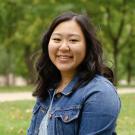
Maya Arakaki - I am a PhD student in the Graduate Group in Ecology. My research ideas are still developing, but I am interested in life history evolution, phenotypic plasticity, spatial ecology, and quantitative methods for modeling population dynamics and genomic predictions in plant species. Outside of research, I enjoy baking, gardening, swimming, and camping with friends.
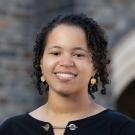
Dr. Brandie Quarles Chidyagwai - I am a plant evolutionary ecologist broadly interested in how plants respond to stressful and variable environments. I integrate field, greenhouse, population genomics, and demographic modeling methods to assess how key traits influence population demography and the opportunity for adaptation of other traits. As a postdoc at Davis, I'm working with the Maloof, Gremer, and Magney labs to identify the factors (such as variation in genotypes, physiology, and the environment) that contribute to population persistence/extinction. Results from field experiments addressing that question will then be used to parameterize an integrated demographic model to project future population dynamics, especially in the face of climate change. I'm also excited to work with CoPI Jamison-McClung on science outreach and education related to the project.
In 2024, I designed and led the first undergraduate research course for IntBio with input from Prof. Maloof and Prof. Gremer - California Wildflower Climate Adaptation: Intro to Evolutionary Ecology Research. Students spent class time learning about evolutionary ecology topics and the scientific method, and working with peers to conduct research. With their groups, students developed research questions, generated hypotheses, collected data, analyzed and interpreted data, and communicated findings. One of the class periods was used for a field trip to the UC Davis Vegetable Crops site for data collection. Outside of class, students individually completed short reading and writing assignments. Students gained a better understanding of population biology and how it relates to climate change research, as well as learning fundamental research skills and practicing team science.
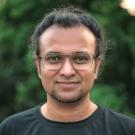
Dr. Rishav Ray - I am an evolutionary ecologist mostly interested in natural history-driven evolutionary questions, with a focus on using large-scale omics data to answer them. I take a curiosity-driven approach, guided by observations of nature, and enjoy quantitatively testing my hypotheses using diverse data sources. Currently, I am a postdoc in the IntBio project at UC Davis, where I integrate multi-omic data, remote sensing, and various phenotypic field data to study Streptanthus tortuosus, a wildflower native to California. My research aims to infer past and future demographic patterns and their evolutionary history and explore how this species may respond and adapt to changing climates.
Past Research Team Members
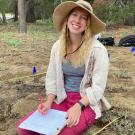
The IntBio research team has included post-baccalaureate members, Carlos Perez (Magney Lab), Jess Lyons (BA, Computational Physics, Magney Lab), and Sarah Ashlock (BS, Plant Science, Gremer Lab). In particular, Sarah played a pivotal role in training the first IntBio undergraduate research students, generating hybrid generations of Streptanthus tortuosus populations used in project research, and installing and monitoring the first common garden experiments.
IntBio Scholars Training Program
STEM undergraduate scholars interested in the IntBio project were invited to apply for the Summer 2026 IntBio Scholars Training Program which builds on a foundation of professional development materials created by the UC Davis Biotechnology Program and Advancing Diversity by Educating the Professors of Tomorrow (ADEPT) project. In addition to conducting field research and learning technical skills related to IntBio research aims, participating students were exposed to a variety of transferrable professional skills useful for STEM career paths in academia, industry, non-profits, and government agencies. The training program includes a series of in-person, professional development workshops, instruction on the development of science communication materials (e.g., infographics), and a culminating poster symposium.
2026 IntBio Scholars
- Sophia Dodson - I am a fourth year Environmental Science and Management undergraduate with a concentration in ecology, biodiversity, and conservation and a minor in Geology. This is my second year as an undergraduate research assistant in the Gremer lab and I am super excited that I get to be a part of the IntBio Scholars program this summer. My favorite part so far has been seeing the plants progress in the common garden.
- Joyoti Dubois - I'm a third year Environmental Science and Management undergraduate focusing on data science applications. I'm interested in the population dynamics of plants under climate change. My work in the field and the greenhouse have supported this interest and I'm excited to learn more through the program!
- Charlotte Evans - I am a third year undergraduate student majoring in Biological Sciences with an interest in ecology and conservation. During my time at Davis, I've loved learning and experiencing the biodiversity in California, as well as collaborating with peers in lab/field research. I'm excited to see the results of our field data on Streptanthus and continue working directly with the plants at Wrights Lake!
- Abril Jimenez-Villena - I am an upcoming third-year undergraduate student majoring in Animal Biology with a minor in Spanish. I'm interested in conservation and supporting work that contributes to climate change solutions. I've enjoyed working with the plants near Wrights Lake and seeing the views on the way to the site.
- Rodrigo Martinez Lombardo - I am an Evolution, Ecology and Biodiversity undergraduate IntBio scholar interested in learning ecological networks of plants with their ecosystem and the technology we use to observe them to improve how we relate to them and create sustainable solutions for society. I really like going to field tips and learning from people across different disciplines!
- Angelica Poveda - I am a fourth year undergraduate majoring in Evolution, Ecology, and Biodiversity. I’m interested in chemical ecology and plant and animal behavior. In my time at UC Davis, I have been able to explore and learn more about sub fields of ecology through programs such as the IntBio Scholars Program. I love learning new field techniques and going to Wrights Lake.
Undergraduate Researchers
Undergraduate researchers across the three research laboratories have been vital contributors to the IntBio project. They have been diligent in maintaining plants in the controlled environment facility, making crosses, helping plant on field days, helping with genomics and remote sensing, collecting and analyzing data, and taking part in project discussions, particularly via the Data Analysis Workshop series led by Prof. Maloof.
We are grateful for the participation of past IntBio research undergraduates, including: Mia Ashby, Sophie Benefiel, Eda Ceviker, Christina Chen, Emily Chen, Kate Cox, Kate Ditrani, Bryce Johnson, Panka Kernacs, Brielle Machado, Hugo Mahatdejkul, Victoria Mattsson, Adam Mhassen, Katie Michaels, Chloe Montgomery, Jhanani Ramkumar, Samantha Swan, Megan Wong, Yong Xie, Samantha Yee, Xinyu Zhang, and Dexuan Zhu.
Current Students
Ben Davis - I am a third-year undergraduate student studying Environment Science and Management, focusing on conservation and ecology. My favorite work in the lab has definitely been surveying and monitoring plants near Wrights Lake!
Rachel Harris - (Mini-bio coming soon!)
Olivia Horstman - (Mini-bio coming soon!)
Seale Guo - (Mini-bio coming soon!)
Alex Willis - I am a third year Evolution, Ecology, and Biodiversity undergraduate with a minor in Professional Writing. I work in the Gremer lab as an undergraduate research assistant, and I’ve written some of the blog posts for the IntBio project. I’m a strong supporter of academic outreach, and want to share my enthusiasm for biology and conservation with the world!