



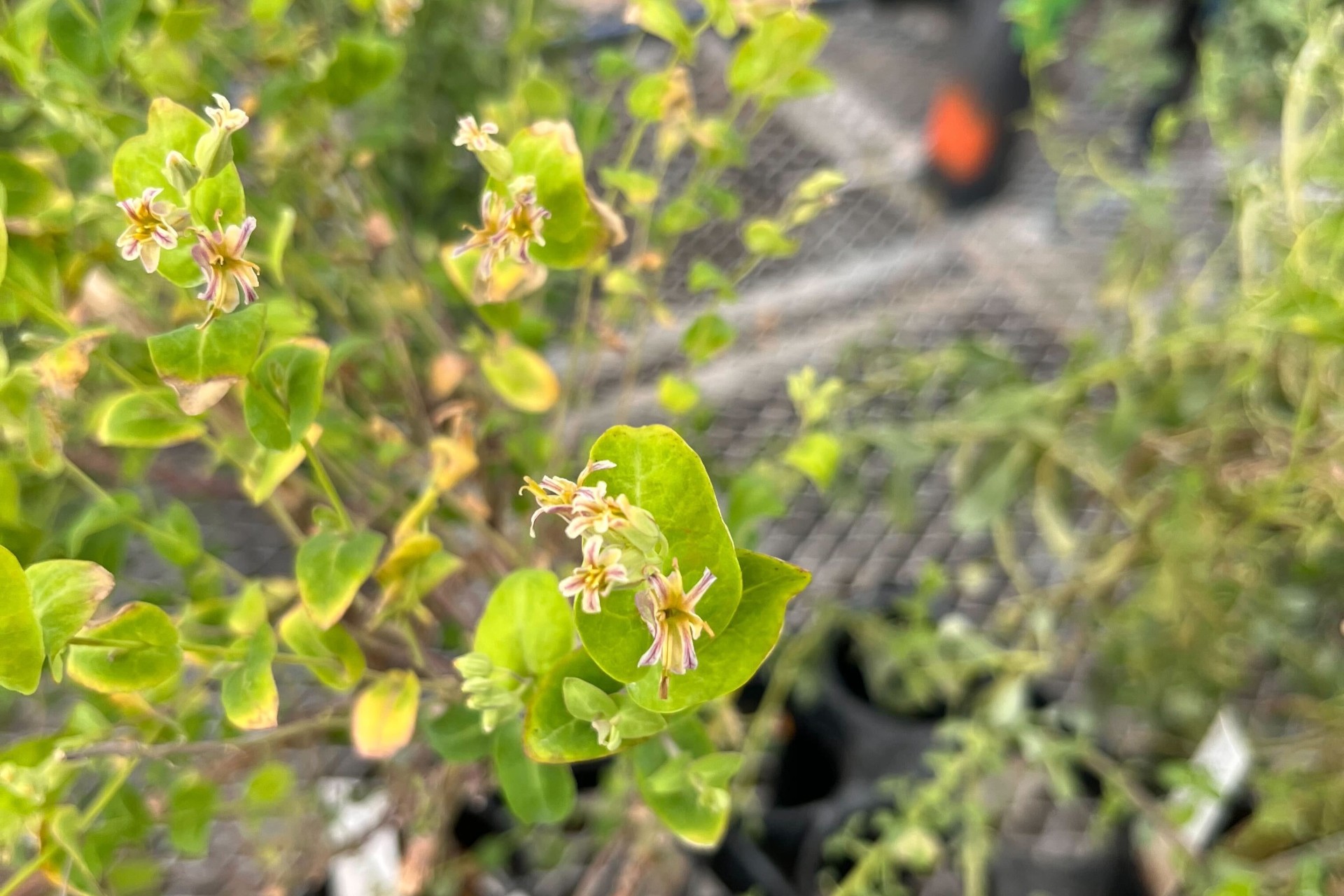
Photo Credit: Sophia Dodson.
The California Jewelflower (Streptanthus)
What is it?

The California Jewelflower, known as the genus Streptanthus, is the plant genus we work with in our lab! It’s a fascinating and versatile flower with some interesting features that make it perfect for studying evolution and ecology. Not only is it remarkable in how it was able to migrate to a new environment, but its lifestyle is surprising in the way it’s able to survive under snow for six months despite originally being a desert plant!
Characteristics
California Jewelflowers are members of the mustard family (Brassicaceae). Some other well known members of this family are broccoli, cabbage, bok choy, and many other popular vegetables with prominent stems and stalks (1). The most notable features of plants in this family are their four part flowers and two part fruits (2). For Streptanthus, the fruits are usually long and flat with many seeds within the two layers of the fruit. As for the flowers, they are usually bell or urn shaped and come in a variety of colors (3).
What Makes it Unique?
Climate Niche
Streptanthus is a genus that is local to California and is considered one of the state’s native wildflowers. They are originally from the desert, but over time they diversified into Mediterranean climates which have wetter growing seasons during the winter (5). With the move to higher elevations and cooler temperatures, Streptanthus had to adapt. These adaptations gave them a fascinating shift in seasonal climate niche that we study in our lab.
In ecology, a niche is what defines the role of an organism and which geographical space it can fit into. A climate niche specifically refers to which range of climates an organism can survive in. Growing zones are a common concept that build off of this idea. Growing zones determine to gardeners which plants will survive the best in their area. The zones are separated by temperature, soil, rainfall, wind, day length, and humidity (6).
The shift in climate niche for Streptanthus meant that it had to undergo some changes for survival. These changes include when it begins its growing season, when it ends its growing season, lifespan, and germination periods. This plasticity in its adaptability has made it the perfect subject of research that we can apply to broader concepts within ecology.

Why is it Important to Understand it?
Biodiversity
The study of evolution and ecology is key to understanding how everything in the world is tied together. This is especially true for the evolution of native flora, since they act as the backbone of ecosystems due to being primary producers.
Native species are very important when it comes to understanding an ecosystem. They have been tied to the land for many generations and have evolved over time as a result of abiotic and biotic factors. Native plants in particular are very important to study in order to understand ecosystems. Take Streptanthus for example. If we study the ecology and biodiversity of Streptanthus, we can understand how it evolved alongside its pollinators, predators, and other organisms that interact with it, all while the environment simultaneously presents abiotic changes. Even though we have a focus on the plant itself, studying its evolution eventually spills out into learning about its importance to its ecosystem.
Climate Change and Conservation
Glossary
Germination: The process of when a dormant seed begins to sprout.
Biodiversity: The variety of life (all animals, plants, and fungi) in an ecosystem.
Biotic: Relating to living things (Ex. Insects, fungi, bacteria).
Abiotic: Relating to nonliving things (Ex. Temperature, humidity, soil, structure).
Greenhouse Effect: An effect where greenhouse gasses (Ex. Water vapor, CO2, methane) trap heat in Earth's atmosphere and warm the Earth as a result.
Wildflowers tell a story, and knowing that story is important for the progression of science. Climate change is an everpressing issue in the modern day. As our CO2 emissions have increased, the atmosphere has been warming due to the increased greenhouse effect. When we study how Streptanthus reacts to a change in climate, we can apply the concepts to understand how organisms in general may respond to climate change.
When it comes to how Streptanthus adapted, we can begin to ask ourselves questions about other organisms. For example, we may wonder if other organisms will migrate to cooler and wetter areas like Streptanthus. We may also wonder if other species of plants are able to adjust their growing seasons and germination periods in response to an increase in temperature or new location.
Climate change is rapid, so this research is important to conduct with organisms that we already notice changes in. Having a basic understanding of climate adaptation can help us form protective measures based on what we know. This can help with conservation efforts as we move forward.
References
University of Connecticut. Brassicas (Brassicaceae) – Family. Home and Garden Education Center. https://homegarden.cahnr.uconn.edu/factsheets/brassicas-brassicaceae-family/#:~:text=Brassicas%20are%20a%20group%20of,oleracea%20family.
Renz Weed Science. Mustard Family + Similar Species. College of Agricultural and Life Sciences University of Wisconsin-Madison. https://renzweedscience.cals.wisc.edu/wp-content/uploads/sites/177/2025/05/06-mustard-family.pdf
Preston R.E., Al-Shehbaz, I.A. (2023). Streptanthus, in Jepson Flora Project (eds). Jepson eFlora Revision 12. https://ucjeps.berkeley.edu/eflora/eflora_display.php?tid=10626
Preston R.E., Al-Shehbaz, I.A. (2023). Streptanthus tortuosus, in Jepson Flora Project (eds). Jepson eFlora Revision 12. https://ucjeps.berkeley.edu/eflora/eflora_display.php?tid=45755
Bontrager, M., Worthy S.J., Cacho N.I., Leventhal L.C., Maloof J.N., Gremer J.R., Schmitt J., Strauss S.Y. (2025). Herbarium specimens reveal a constrained seasonal climate niche despite diverged annual climates across a wildflower clade. Proceedings of the National Academy of Science 122(28): e2503670122.. https://doi.org/10.1073/pnas.2503670122
University of California. Climate Zones. University of California Agriculture and Natural Resources. https://ucanr.edu/program/uc-master-gardener-program/climate-zones